

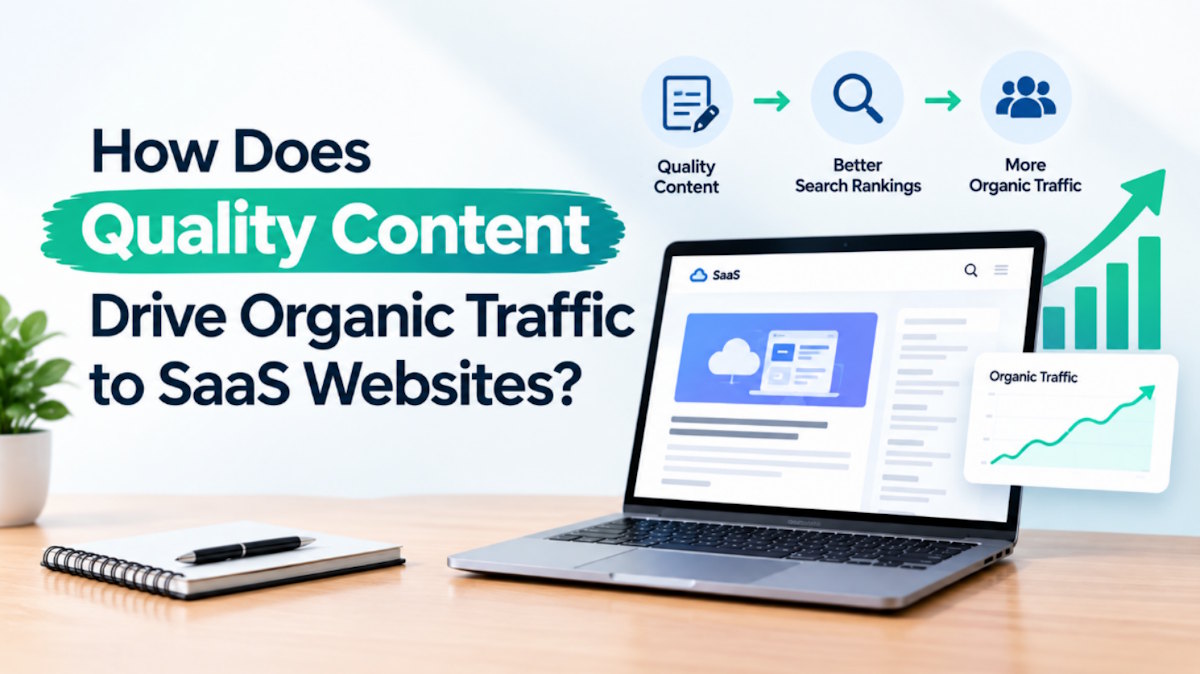
Not every SaaS business can go with expensive ads, especially startups. Many SaaS businesses rely on organic traffic that comes to them through valuable content. Getting organic traffic to a SaaS website is not easy. However, it is somewhat less expensive compared to paid ads and is more valuable in the long run.
Quality content is the kind that answers users’ questions and solves their problems. At the same time, that content fulfills search engines’ requirements that algorithms reward. We have seen various SaaS websites that work on quality content and have improved both their search visibility and organic traffic.
Quality content gives readers useful information and helps them solve a problem. It does not focus only on promoting a product. Instead, it helps users understand a topic, find answers, or make better choices.
For SaaS websites, quality content can include:
Creating quality content that adds value to a SaaS website is not an ordinary task. If you are thinking of just kicking the AI-generated content, the copy-paste thing, you are not going to get results.
You will find various people claiming that AI content works, repeatedly. Yes, AI content works and gets ranked on Google, but at the lowest position. And SaaS websites aim for the top positions, not the lowest.
So, instead of investing time and effort in AI tools, it’s better to invest in the right assets or an SEO content partner like SaaS SEO Agency. Many SaaS businesses that have worked with them have had their organic search visibility improved and have gotten more plan sales.
However, if you have a good grip on writing content for yourself, you should follow these few simple practices to get better results from your content.
Most importantly, create content for people first. Search engines aim to show useful results, so content that meets real user needs gives your website a stronger foundation.
Quality content helps SaaS websites get more visitors in many ways.
Search intent means what people want to find online. Good content gives them the answers they need. This helps bring the right people to a website.
Keywords are words people type into search engines. SaaS sites can use these words in their content. This helps search engines know what each page is about. Good content also needs to meet user needs.
Writing about related topics helps a site show its knowledge. Links between pages also help users find more useful content. This can help search engines understand the site better.
Backlinks are links from other sites to your site. Useful content can make other sites link to your pages. These links can help improve search rankings and bring more visitors.
Good content helps people learn about a product and its value. Clear and honest answers can help them trust a brand. This may lead them to try the product or ask for a demo.
Publishing content is only one part of the process. SaaS companies should also track its results. Here are some useful metrics to monitor:
Tools such as Google Search Console and Google Analytics can help track many of these metrics. However, more traffic does not always mean better results. A SaaS website should attract visitors who may need its product and help them move toward a useful action.
Even good content can fail to bring results if a company follows the wrong approach. So, avoid these common mistakes when writing content for a SaaS website:
Quality content plays an important role in driving organic traffic to SaaS websites. It helps websites rank for the right keywords, build trust, and get more visitors.
However, getting good results takes time and effort. You need to focus on users’ needs and create content that helps them solve their problems. If you can write good content on your own, go for it.
If you outsource, do not fall for ordinary writers. Work with an experienced and trusted company like SaaSSEOAgency.org to fulfill your website content needs.